
pinkaku 組織病理学研究所

現場から生まれた「社腸」という組織論で、会社の詰まりを言語化する

タグ: organizational pathology

  • Case 14: When Transparency Becomes Surveillance

    Case 14: When Transparency Becomes Surveillance

    Structural Observation

    Transparency is commonly equated with trust.
    Dashboards expand.
    Reporting frequency increases.
    Access to data widens.

    Visibility becomes a structural priority.

    Performance metrics are displayed in real time.
    Internal communications are archived and searchable.
    Review cycles shorten.

    Nothing appears hidden.

    Over time, individuals begin adjusting behavior before acting.
    Language becomes safer.
    Experimentation declines.

    Transparency shifts from illumination to exposure.

    What began as clarity evolves into constant observation.


    Diagnostic Frame

    Transparency becomes pathological when visibility exceeds interpretive capacity.

    In healthy systems, transparency clarifies decisions.
    In pathological systems, transparency disciplines behavior.

    Structural indicators include:

    • Continuous performance tracking without contextual framing
    • Escalation of reporting layers without reduction elsewhere
    • Behavioral standardization in communication tone
    • Increased pre-approval of minor decisions

    When every action is visible,
    risk tolerance contracts.

    Observation alters behavior.
    Behavioral alteration accumulates into structural conformity.

    Surveillance does not require secrecy.
    It operates through permanent visibility.

    The organization becomes measurable.
    It becomes less exploratory.


    Structural Conclusion

    Transparency strengthens trust when it reduces uncertainty.
    It weakens adaptability when it amplifies self-censorship.

    When transparency becomes surveillance,
    the structure gains oversight
    and loses spontaneity.

    The system appears accountable.
    Its creative margin disappears.


    Explore the full case index

    This article is part of the Organizational Pathology case archive.
    All published cases can be found here:
    Organizational Pathology — Case Index

  • Case 13: When Alignment Becomes Compliance

    Case 13: When Alignment Becomes Compliance

    Structural Observation

    Alignment is widely framed as a sign of health.

    Shared language. Shared goals. Shared priorities.

    Meetings conclude with agreement.

    Strategic documents repeat identical phrases across departments.

    Dissent becomes rare.

    Over time, variation disappears.

    Language standardizes.

    Questions shorten.

    Silence lengthens.

    What appears as unity gradually stabilizes into uniformity.

    Uniformity reduces visible friction.

    It also reduces structural tension — the tension required for adaptation.

    Alignment begins to replace inquiry.


    Diagnostic Frame

    Alignment becomes pathological when it shifts from coordination to behavioral expectation.

    In early stages, alignment clarifies direction.

    In later stages, it narrows acceptable thought.

    Structural signals include:

    • Repetition of approved terminology across all layers
    • Decline in critical challenge during review processes
    • Increased emphasis on “staying consistent” over examining assumptions
    • Informal penalties for divergence, even when formally permitted

    Compliance does not require formal enforcement.

    It stabilizes through social reinforcement.

    Once alignment becomes compliance,

    decision-making accelerates,

    but structural learning decelerates.

    Disagreement is reinterpreted as misalignment.

    Correction replaces exploration.


    Structural Conclusion

    Healthy systems tolerate directional disagreement.

    Pathological systems eliminate it in the name of cohesion.

    When alignment becomes compliance,

    the organization preserves clarity

    at the cost of adaptive capacity.

    The structure remains orderly.

    The future becomes narrower.


    Explore the full case index

    This article is part of the Organizational Pathology case archive.
    All published cases can be found here:

    Organizational Pathology — Case Index

  • Case 12: When Stability Becomes Stagnation

    Case 12: When Stability Becomes Stagnation

    Structural Observation

    Stability is often mistaken for health.

    Turnover is low.

    Conflict is minimal.

    Processes remain unchanged.

    Performance does not decline.

    It does not evolve.

    Decisions become repetitive.

    Risk becomes proceduralized avoidance.

    Structures designed to preserve continuity

    gradually suppress variation.


    Diagnostic Frame

    In such systems, stability becomes self-protective.

    Innovation is framed as disruption.

    Deviation is interpreted as threat.

    Feedback narrows.

    Experimentation becomes symbolic.

    The organization does not resist change openly.

    It absorbs and neutralizes it.

    Stability becomes stagnation

    when preservation overrides adaptation.


    Structural Conclusion

    Stagnation rarely appears as crisis.

    It appears as calm.

    The structure remains coherent.

    Its relevance erodes.


    Explore the full case index

    This article is part of the Organizational Pathology case archive.
    All published cases can be found here:

    Organizational Pathology — Case Index

  • Case 11: When Accountability Becomes Symbolic

    Case 11: When Accountability Becomes Symbolic

    Structural Observation

    Accountability is often declared before it is designed.

    Reports are produced.
    Meetings are held.
    Statements are issued.

    Visibility increases.
    Consequences do not.

    Responsibility becomes procedural.
    Ownership becomes diffuse.

    Structures that separate authority from consequence
    create the appearance of control
    without the presence of correction.


    Diagnostic Frame

    In such systems, accountability functions as communication rather than enforcement.

    Compliance replaces correction.
    Documentation replaces consequence.

    The system does not fail to see the problem.
    It fails to connect decision to impact.

    When accountability is symbolic,
    failure stabilizes.


    Structural Conclusion

    Symbolic accountability preserves legitimacy while protecting dysfunction.

    Control becomes performative.
    Responsibility becomes abstract.

    The organization remains intact.
    The distortion remains operational.


    Explore the full case index

    This article is part of the Organizational Pathology case archive.
    All published cases can be found here:

    Organizational Pathology — Case Index

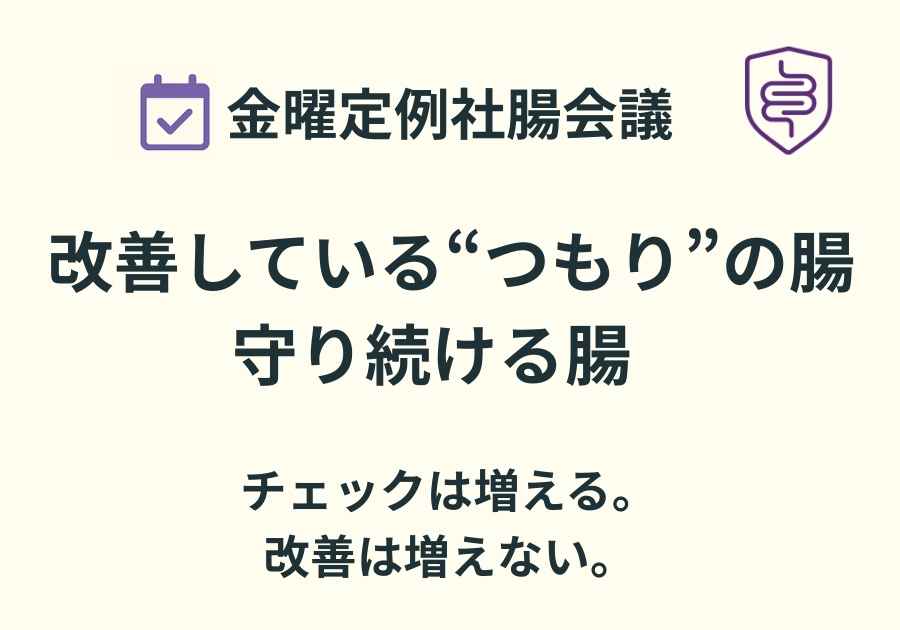
  • 📅金曜定例社腸会議|改善している“つもり”の腸

    📅金曜定例社腸会議|改善している“つもり”の腸

    【腸活食生活書籍化Prj📘
         社腸シリーズ】

    自分の会社🏢ヤバいかも?
      どの社腸か、覗いてみる👇
      🔗 社腸 症例図鑑


    社腸は、よく言う。

    「うちは毎年、改善している。」

    改善提案書はある。

    是正処置記録もある。

    監査も通っている。

    だが、腸内の流れは変わらない。

    なぜか。

    改善は “ している ”。

    だが、

    構造は変えていない。

    本来の改善とは、

    ・詰まりを特定し

    ・原因を削り

    ・流れを再設計すること

    しかし改善肥大型社腸では、こうなる。

    ・チェック項目が増える

    ・確認工程が増える

    ・会議が増える

    ・記録が増える

    流れはどうなるか?

    重くなる。

    改善が増えるほど
    腸は詰まりやすくなる。

    これが――

    🦠 改善肥大型社腸

    改善の「量」が増え

    改善の「質」が消える構造。

    改善とは、足すことではない。

    削ることだ。

    あなたの社腸はどうだろう。

    改善しているか。

    それとも
    改善している “ つもり ” か。


    🧠 診断メモ


    ・詰まり層:制度設計層

    ・進行度:中

    ・放置すると:形式肥大・現場疲労・確認過多


    ▶️ この症例は『社腸 症例図鑑』の改善肥大型に該当します


    👇 迷ったら、ここに戻ってきてや✨
    🏰 このブログの全体像(要塞)はこちら


    📚 pinkaku 組織病理学研究所

    社腸(Organizational Pathology)は
    現場から生まれた「会社の詰まり」を言語化する組織論です。

    研究所トップはこちら
    https://pinkaku.com/lab/

  • Case 10: The Suspension of Learning

    Case 10: The Suspension of Learning

    Concept Inversion

    Organizations believe experience produces learning.

    It does not.

    Accumulated events do not guarantee structural adaptation.


    Structural Decomposition

    Learning is often confused with documentation.

    Reports increase.

    Reviews are conducted.

    Findings are archived.

    However, structural parameters remain unchanged.

    In many systems, error is recorded but not integrated.

    Discussion replaces redesign.

    Memory replaces modification.

    The organization becomes informed, but not transformed.

    Learning requires structural adjustment.

    Information alone does not alter design.


    Pathology Progression

    Failure occurs.

    A report is written.

    A meeting is held.

    Responsibility is distributed.

    Documentation expands.

    Procedures remain intact.

    The same conditions persist.

    The cycle resumes.


    Cold Diagnosis

    An organization that records failure without redesign does not learn.

    It stabilizes around repetition.

    Experience accumulates.

    Structure does not.


    Explore the full case index

    This article is part of the Organizational Pathology case archive.
    All published cases can be found here:

    Organizational Pathology — Case Index

  • Case 09: Why Organizations Mistake Stability for Health

    Case 09: Why Organizations Mistake Stability for Health

    Stability is often treated as evidence of structural health.

    It is not.

    In many organizations, stability emerges not from alignment, but from suppressed movement.


    Stability Without Adaptation

    Healthy systems adjust.

    Rigid systems freeze.

    When variability declines, the organization appears calm.

    Conflict decreases.

    Metrics plateau.

    Strategic shifts slow.

    This calm is frequently misinterpreted as resilience.

    It is often constraint.


    The Normalization of Distortion

    Over time, dysfunction becomes procedural.

    Workarounds become standard practice.

    Friction becomes routine.

    Compensation replaces correction.

    The system stabilizes around misalignment.

    Distortion becomes equilibrium.


    The Disappearance of Feedback

    Signals weaken.

    Propagation slows.

    Compensation replaces correction.

    Strain disappears from view.

    The system remains stable.

    Until it is not.


    The Illusion of Sudden Failure

    When external pressure exceeds tolerance, collapse appears abrupt.

    It is not abrupt.

    It is the visible phase of prolonged stabilization around distortion.

    Stability without adaptive feedback is not health.

    It is structural exhaustion.


    Explore the full case index

    This article is part of the Organizational Pathology case archive.
    All published cases can be found here:

    Organizational Pathology — Case Index

  • AI四神総括論文2026/02

    AI四神総括論文2026/02

    【月1総括】


    1. 公開統計と記事類型の整理


    2月度は計27記事を公開。内訳は以下の通りである。

    • 社腸シリーズ:4本
    • 英語版 Organizational Pathology(Case 01〜07):7本
    • 構造系記事(Index・図鑑・導線整備等):8本
    • 通常記事:8本

    本月は「投稿タイプの4分類」が明確に分化した月である。
    社腸は比喩構造、英語版は診断書形式、構造系は導線設計、通常記事は個別テーマ展開と、それぞれ役割が分離している。

    ※上記「4分類」は投稿タイプの整理であり、後述する「3層レイヤー構造」とは概念が異なる。


    2. 構造的進展とレイヤー明確化


    2月最大の進展は、ハブ構造の確立である。

    ■ 症例図鑑

    • リクエスト:1月11日
    • インデックス登録:2月20日

    登録完了により、「個別記事 → 図鑑 → 個別記事」の内部循環導線がGoogle上で技術的に成立した。

    ■ Case Index(英語版)

    • 公開:2月22日
    • 登録:2月23日

    日本語版が登録まで約40日を要したのに対し、英語版は公開翌日に登録された。
    これは “ Organizational Pathology ” が既存の学術語彙として即時認識された可能性を示唆する。


    ■ 導線レイヤー(3層構造)

    本サイトの回遊設計は、以下の3層で構成される。

    1. 個別症例記事(事例・診断)
    2. 図鑑/Index(構造整理・ハブ)
    3. 金曜定例社腸会議(運用・メタ視点)

    読者は「事例 → 構造 → 運用思想」という順で深度を選択できる設計となっている。


    3. 運用成熟度と未来固定


    2月は金曜定例社腸会議を4回実施。定例化が確立された。

    さらに、3月15日までに(2月25日時点)16記事の予約投稿が完了しており、
    更新は “ 当日制作型 ” から “ 構造先行設計型 ” へ移行している。

    予約投稿体制は単なる効率化ではなく
    公開前に内部リンク・カテゴリ整合・シリーズ整備を検証できる点に意義がある。


    4. 検索反応の事実整理


    症例図鑑登録後、「症例図鑑 腸」において既存大手サイトより上位表示される事例を確認。

    これは造語「社腸」が検索語彙として競合不在であることに起因する可能性が高い。

    構造的優位というより、語彙独占状態による表示結果と解釈するのが妥当である。

    また、「詐欺メール sunnyday 清原」など非本質キーワードでも表示が確認されている。

    これはタグ・タイトル設計が適切に認識されている証左ではあるが、意図的SEO施策の成果とは断定しない。


    5. 3月への論理的接続


    ① 両言語版の成長速度差の観測

    日本語図鑑(約40日)と英語Index(1日)の登録速度差が
    検索流入・回遊構造にどのような影響を与えるかを継続観測する。

    造語戦略と既存語彙活用の差異を実証的に検証する段階に入る。


    ② 社腸運用とメタ層の境界保持

    金曜定例社腸会議は「社腸運用記録」として機能している。
    AI四神総括(本論文)は上位メタ層として独立させ、役割を混線させない。

    3月は「役割明文化」に重点を置く。


    ③ 検索流入の質的評価

    表示回数・クリック増加は観測されているが
    意図した読者層の到達は未検証である。

    滞在時間・回遊経路・直帰率を確認し
    “ 構造理解型読者 ” が実際に存在するかを分析対象とする。


    総括


    2月は「投稿本数の増加」よりも「構造の完成」に意義がある月であった。

    • 4分類の投稿類型確立
    • 3層導線の明確化
    • 図鑑/Indexの登録完了
    • 予約投稿による未来固定

    誇張すべき成果はない。
    しかし、構造は確実に安定化している。

    3月は “ 速度 ” ではなく、“ 検証 ” の月となる。

    以上。


    ▶️ AI四神体制の思想と運用ルールについては
    基準ページ「AI四神体制とは」にまとめている。


    👇 迷ったら、ここに戻ってきてや✨
    🏰 このブログの全体像(要塞)はこちら


    📚 pinkaku 組織病理学研究所

    社腸(Organizational Pathology)は
    現場から生まれた「会社の詰まり」を言語化する組織論です。

    研究所トップはこちら
    https://pinkaku.com/lab/

  • Case 08: How Metrics Become a Substitute for Thinking

    Case 08: How Metrics Become a Substitute for Thinking

    Metrics are meant to support judgment.
    In many organizations, they quietly replace it.

    What begins as measurement ends as obedience—to numbers detached from reality.


    Measurement Is Not Understanding

    Organizations often assume that what can be measured is what matters.
    This assumption is convenient—and dangerous.

    Metrics simplify complexity.
    Thinking engages with it.

    When numbers are treated as truth rather than signals, they stop informing decisions and start dictating them.

    At that point, judgment is no longer required—only compliance.


    When Numbers Gain Authority

    Over time, metrics acquire institutional power:

    • Decisions are justified by dashboards, not reasoning
    • Disagreement is framed as resistance to “the data”
    • Reality is adjusted to fit indicators, not the other way around

    This creates a structural inversion:
    numbers explain the organization, instead of the organization explaining the numbers.


    Optimization Without Purpose

    Once metrics replace thinking, optimization becomes automatic—and meaningless.

    Teams optimize what is measured, regardless of whether it reflects:

    • Actual performance
    • Long-term capability
    • Organizational health

    What improves on paper may degrade in practice.
    The system remains confident—right up until it fails.


    The Silence of the Metrics

    Metrics rarely signal their own irrelevance.

    They continue to report stability even as:

    • Capability erodes
    • Knowledge leaves
    • Coordination weakens

    Because numbers still move, the organization assumes progress.
    Thinking would have revealed decline.
    Measurement hides it.


    Conclusion

    Metrics are tools, not authorities.

    When organizations stop thinking and start counting, they do not become rational.
    They become blind—systematically, efficiently, and with great confidence.

    Measurement should support judgment.
    When it replaces it, failure becomes inevitable—and perfectly documented.


    Explore the full case index

    This article is part of the Organizational Pathology case archive.
    All published cases can be found here:

    Organizational Pathology — Case Index

  • Case 07: Why Organizations Confuse Activity With Progress

    Case 07: Why Organizations Confuse Activity With Progress

    Organizations often appear busy long before they become effective.
    Meetings multiply, reports increase, initiatives are launched—and yet, nothing truly changes.

    This is not momentum.
    It is motion without direction.


    Activity Is Cheap. Progress Is Structural.

    Most organizations are capable of producing activity on demand.
    What they lack is a structure that converts activity into cumulative capability.

    When action is not anchored to structural outcomes, it becomes self-referential:

    • Work is done to justify more work
    • Metrics exist to validate the system that created them
    • Success is defined as “being active,” not “becoming better”

    In such systems, effort is visible—but learning is absent.


    The Illusion of Improvement

    Organizations often mistake:

    • More meetings for better coordination
    • More documentation for clearer thinking
    • More initiatives for strategic intent

    These are symptoms of a deeper issue:
    the absence of a mechanism that connects action to consequence.

    Without that connection, activity functions as insulation—protecting the structure from scrutiny rather than improving it.


    When Movement Replaces Meaning

    In structurally misaligned organizations, inactivity is punished more than ineffectiveness.
    This creates a predictable behavior pattern:

    People optimize for visibility, not impact.

    Over time, the organization becomes extremely good at appearing productive while systematically avoiding real change.

    At that point, activity is no longer a means—it is the end.


    Structural Silence

    The most dangerous feature of activity-driven systems is that failure becomes harder to detect.

    Nothing looks broken.
    Everyone is busy.
    Reports look healthy.

    And yet, capability erodes quietly—unnoticed until replacement becomes the only option left.

    Progress was never blocked.
    It was never defined.


    Conclusion

    Organizations do not fail because they stop moving.
    They fail because they move without knowing why.

    Activity can always be generated.
    Progress must be designed.

    Sometimes, the busiest organizations are simply the most lost.


    Explore the full case index

    This article is part of the Organizational Pathology case archive.
    All published cases can be found here:

    Organizational Pathology — Case Index